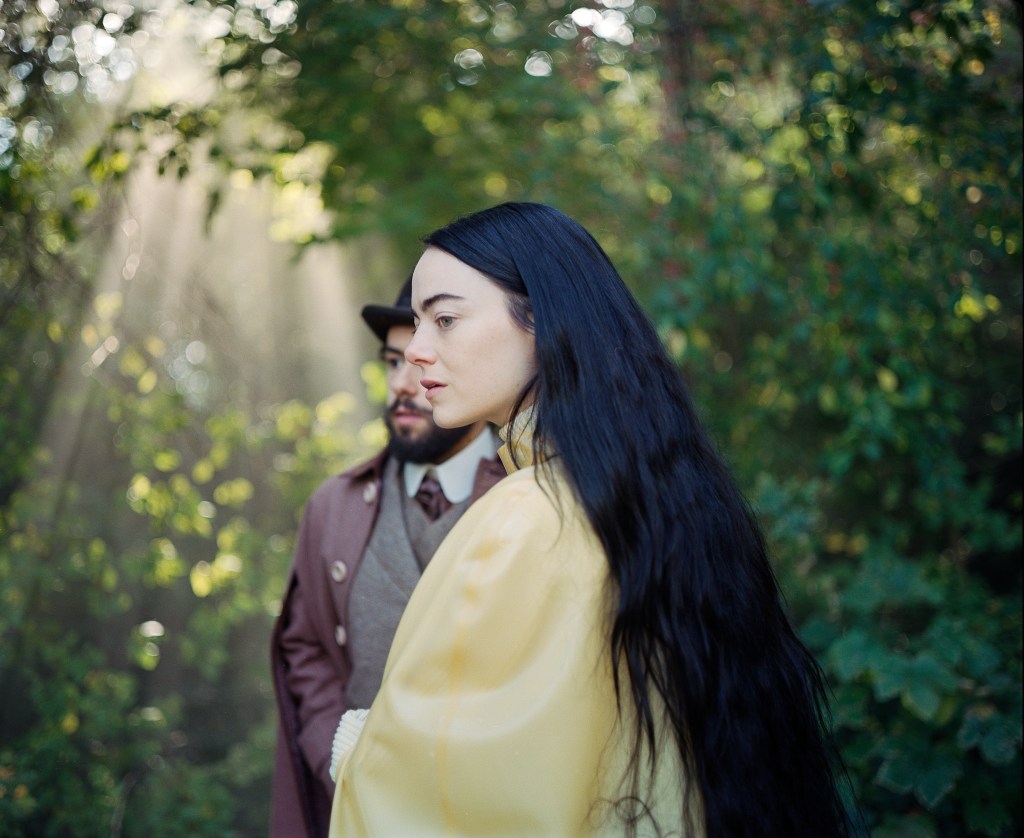
(Photo by Yorgos Lanthimos, courtesy of Searchlight Pictures)
9/10
“Poor Things” is a sexual odyssey of grand proportions, following a woman from her most naive and innocent to her most commanding and autonomous.
Emma Stone deserves all the accolades and buzz she’s received for her performance as Bella. Stone becomes unrecognizable in this role, expertly portraying a range of childlike clumsiness to mature grace. Director Yorgos Lanthimos delivers one of the most unique films of 2023, filled with wholly original and distinct visuals and superb outings from the cast and crew.
Bella Baxter is a woman reanimated with the brain of her unborn child. Given life by her surgeon creator Godwin, Bella is betrothed to the doctor’s assistant, Max McCandles. However, Bella finds freedom and independence in her budding sexuality, discovering pleasure all while learning to walk and speak. Introduced to sensations she cannot explain, she decides she’s not the marrying type — at least not yet. Wanting to explore the world and her sexual urges, Bella finds her ticket in the roguish and charismatic Duncan Wedderburn; so begins her odyssey.
And like Homer’s Odyssey, Bella’s adventure leads her through various trials on her quest back home. In place of sirens and cyclopes, she faces a series of insatiable men.
Each globetrotting stop provides unique and eccentric sights — like an LSD trip with The Beatles in their yellow submarine straight into a Victorian era painting. This makes the film’s era impossible to pin down. It seems like we’re in a world at the turn of the 19th century, but filled with the futuristic machinery of “Metropolis.”
Lisbon, defined by its saturated blues and yellows, is where we’re given one of the film’s best scenes. Bella begins to dance, and Duncan follows. Their jerky and uneven gyrations mixed with the bumps and thumps of the score are somehow perfectly offbeat and fun. Bella is coming into her own as a woman.


Bella explores Lisbon and later dances with Duncan. (Photos courtesy of Searchlight Pictures)
Unfortunately, Bella’s (and the audience’s) amusement screeches to a halt. Duncan, upset with Bella’s newfound independence (which yields some of the best lines in the film), kidnaps and loads her onto a cruise ship. The plot slows exponentially in this section, so much so that it could have been removed. We get value from fellow cruise ship guests Harry and Martha, who help bolster Bella’s independence from Duncan and reveal part of the world’s suffering, which leads to Bella’s loss of innocence with the outside world. However, this message could have been communicated in various ways, none of which required a 30-minute slog that took you out of the film world. Bella could have stumbled upon suffering and manipulation in her wandering in Lisbon or met a kind stranger at her hotel to provide words of support.
The film quickly regains its footing in Paris. Here, we are treated to an excellent array of scenes of Duncan screaming and crying about Bella’s new job as a prostitute. Mark Ruffalo plays Duncan to perfection, matching guile with adolescent temper tantrums. The film uses a device so similar to “Barbie” that I almost felt deja vu. Barbie and Bella are both brought into the world for the first time, and both films use their lead’s naivete to explain the ridiculousness of our reality. “Barbie” examines institutional patriarchy, while “Poor Things” examines the double standard between male and female sexuality.
While Duncan lauds his sexual prowess, he is horrified that Bella uses her body to make them money when they run out. Bella leaves Duncan and continues to work to fund her research into anatomy and surgery, inspired by her creator. Duncan, in his stubbornness, sleeps outside in the snow. The film is, in a sense, an explicit version of “Barbie.” While “Barbie” presents you with reality on a silver platter of ridiculousness, “Poor Things” screams, swears and throws the platter into your face.
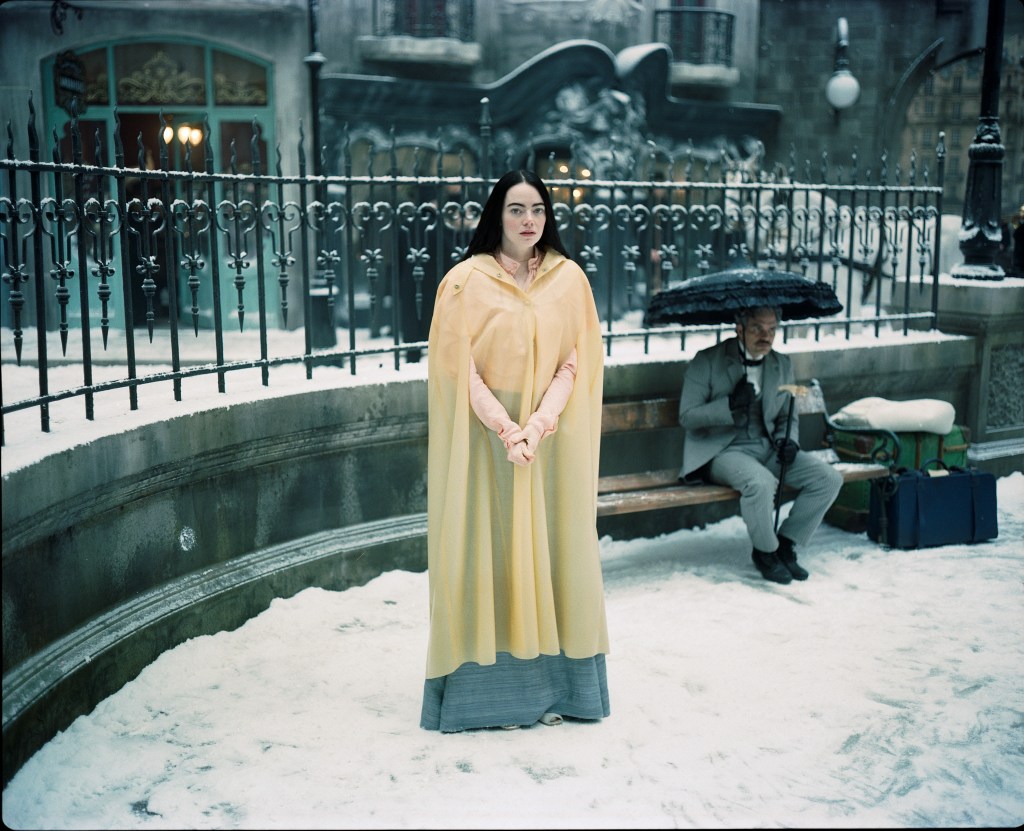
Bella and Duncan stuck in Paris. (Photo by Yorgos Lanthimos, courtesy of Searchlight Pictures)
Bella returns home to London, much to the dismay of Duncan. But, just as Odysseus faced his own suitors when he returned home to his wife, Bella faces another intemperate man upon her return. She agrees to go through with her marriage to Max, as he’s the only man she’s ever really liked, but their wedding day is interrupted by Alfie Blessington, the man she was married to in her past life. She accompanies him to her old home but is trapped as she was with Duncan.
She escapes and, using what she’s learned, replaces Alfie’s brain with that of a goat as punishment. The film closes this way — Godwin passes and Bella is content to come home, strong with her newfound autonomy and with a lot more knowledge about human anatomy.
Stone’s performance, mixed with the stylized sets and visuals, produces a film that is not perfect, but a must-watch regardless.
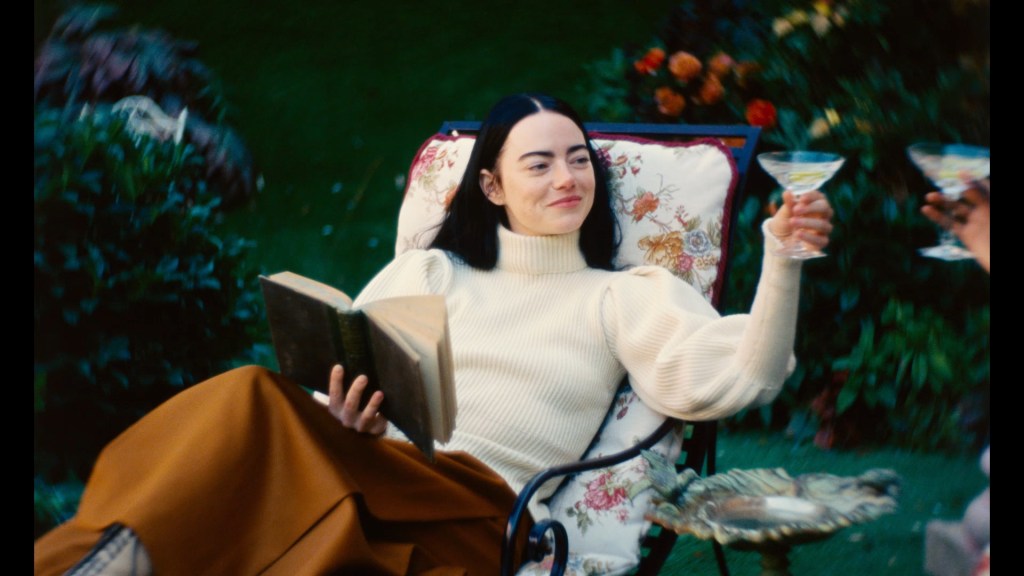
Bella relaxes at home in London after completing her journey of sexual and self-discovery. (Photo courtesy of Searchlight Pictures)
“Poor Things” has been nominated for Best Picture at the 96th Academy Awards, broadcasting March 10 on ABC, 7 p.m. CDT. Other nominees include “The Holdovers,” “American Fiction,” “The Zone of Interest,” “Barbie,” “Oppenheimer,” “Maestro,” “Past Lives,” “Anatomy of a Fall” and “Killers of the Flower Moon.” For more about Best Picture nominees at the 96th Academy Awards, keep reading SZNSMAG.com.



 SZNS MAG